

Powder Springs Construction Waste Management Services
Choose us for your construction waste management needs and experience reliable service, eco-friendly disposal, and seamless project cleanup that keeps your site safe and compliant.
Get a Free QuoteOur Powder Springs Junk Removal Services
Construction Waste Management in Powder Springs, GA – Local Service Guide
Construction waste management in Powder Springs, GA, requires a tailored approach for both residential and commercial needs. In neighborhoods like Country Walk and Silverbrooke, residents often need to dispose of bulky items such as furniture, mattresses, and appliances during seasonal cleanouts, home renovations, or after major life events. Local weather, property access, and item size can impact logistics, especially for large items or during rainy seasons. For residential spaces—garages, basements, attics, and yards—spring and fall cleanouts are common, with yard waste peaking after storms or during leaf drop. Areas prone to flooding or with dense tree coverage, like those near Powder Springs Park, may require more frequent debris removal and trash pickup, often aligned with city schedules.
Commercial sectors in downtown Powder Springs, including restaurants, offices, and retail spaces, face unique challenges such as high waste volumes, strict timing, and the need for discreet removal. Specialty services—dumpsters, estate cleanouts, hoarding, and construction debris—are often needed for foreclosures, major renovations, or property transitions, requiring careful planning and coordination with local regulations. For guidance on permits and disposal rules, consult the Powder Springs Public Works Department.
Key Considerations for Construction Waste Management in Powder Springs
- Timing cleanouts with local weather and seasonal events
- Securing necessary permits for large-scale disposal
- Using approved disposal and recycling channels
- Ensuring property access for large or heavy items
- Estimating waste volume for proper service selection
- Coordinating with city schedules and category-specific requirements
Benefits of Construction Waste Management in Powder Springs
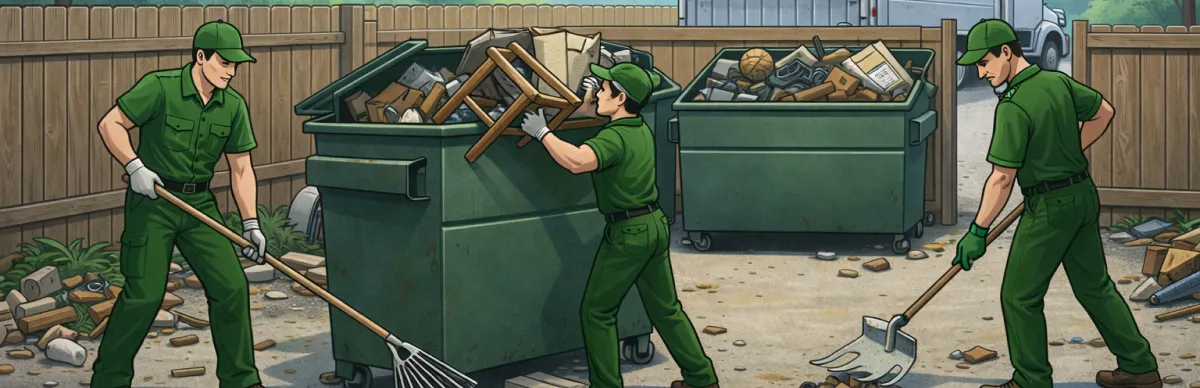
Efficient Debris Removal
Cost-Effective Waste Solutions
Environmentally Friendly Practices
Compliance With Local Regulations
Improved Site Safety
Flexible Scheduling Options
Coordinating Construction Debris Disposal with Powder Springs Public Works and Cobb County Services
Construction and demolition (C&D) waste generated within Powder Springs must be managed in accordance with both municipal and county-level solid waste regulations. Powder Springs falls within Cobb County, which operates solid waste transfer and disposal infrastructure serving city residents and contractors. Before beginning any renovation or demolition project, property owners and contractors should confirm disposal logistics and hauler requirements through the appropriate municipal departments.
- C&D waste categories include lumber, drywall, roofing shingles, concrete, brick, metal framing, insulation, and flooring materials
- Haulers operating within city limits must comply with local business licensing and right-of-way requirements
- Residential renovation projects generating significant debris may require coordination with the city's Public Works Department for street access and staging
- Commercial construction sites must maintain waste management plans and ensure debris does not obstruct public roadways or stormwater infrastructure
Powder Springs Public Works Department
4488 Pineview Drive, Powder Springs, GA 30127
Phone: (770) 943-1666
Official Website: Powder Springs Public Works Department
Building Permit and Land Disturbance Requirements for Powder Springs Construction Projects
Any construction, renovation, or demolition activity in Powder Springs that generates waste typically requires permits through the city's Community Development Department. Building permits ensure that structural work meets code, while land disturbance permits address erosion control and environmental protection during site work. Failure to obtain required permits before generating construction waste may result in code enforcement action and project delays.
- Building permits are required for structural demolition, major renovations, roofing replacements, and additions that produce debris
- Land disturbance permits apply to projects disturbing one acre or more, requiring erosion and sediment control plans to prevent construction debris and sediment from entering stormwater systems
- Plan review and inspections verify that waste containment measures are in place before and during construction
- Tree removal permits may be required when clearing sites, with specific regulations governing the city's tree canopy
Powder Springs Building Permits
4488 Pineview Drive, Powder Springs, GA 30127
Phone: (770) 943-1666
Official Website: Powder Springs Building Permits
Powder Springs Land Disturbance Permitting
4488 Pineview Drive, Powder Springs, GA 30127
Phone: (770) 943-1666
Official Website: Powder Springs Land Disturbance Permitting
Georgia's Solid Waste Management Act and Construction Debris Compliance
Georgia regulates construction and demolition waste under the Georgia Comprehensive Solid Waste Management Act (O.C.G.A. § 12-8-20) administered by the Georgia Environmental Protection Division (GA EPD). This legislation establishes permitting requirements for solid waste handling facilities, sets standards for C&D landfills, and defines prohibited disposal practices. Contractors and property owners in Powder Springs must ensure that all construction waste is transported to permitted facilities.
- C&D landfills in Georgia are separately permitted from municipal solid waste landfills and accept inert materials such as concrete, brick, wood, and asphalt
- Hazardous materials including asbestos, lead-based paint debris, chemical solvents, and treated wood are prohibited from C&D landfills
- Illegal dumping of construction debris carries penalties under Georgia law, including fines and potential criminal charges
- Waste haulers must transport C&D materials to GA EPD-permitted facilities and maintain proper manifests
- Asbestos-containing materials require handling by licensed abatement contractors in accordance with both state and EPA National Emission Standards for Hazardous Air Pollutants (NESHAP) regulations
Material Sorting and Recycling Requirements for Powder Springs Construction Sites
Effective construction waste management in Powder Springs requires proper sorting and separation of materials at the job site. While Georgia does not currently mandate a specific C&D waste diversion rate, responsible material recovery reduces disposal costs and supports regional landfill diversion goals. Contractors should establish designated areas on-site for separating recyclable materials from general debris before transport to appropriate facilities.
- Metals (steel studs, copper wiring, aluminum flashing, rebar) should be separated for scrap metal recycling; local scrap yards in the Cobb County area accept sorted metals
- Concrete, brick, and asphalt can be processed at inert waste facilities for use as aggregate or fill material
- Clean wood (untreated, unpainted lumber) may be accepted at wood recycling or mulching facilities
- Roofing shingles (asphalt) are recyclable at select facilities that process them into road paving material
- Drywall and gypsum board should be kept dry and separated, as some facilities accept clean drywall for recycling
- Cardboard and packaging from construction materials should be flattened and recycled through standard recycling channels
Proper separation at the source prevents contamination and ensures materials are accepted at recycling facilities rather than diverted to landfill.
Safety and Hazardous Material Handling on Powder Springs Construction and Demolition Sites
Construction waste management in Powder Springs must account for potential hazardous materials, particularly in older structures. Buildings constructed before 1978 may contain lead-based paint, and structures built before 1980 may have asbestos-containing materials in insulation, floor tiles, roofing, or pipe wrapping. Federal and state regulations impose strict handling, notification, and disposal requirements for these materials.
- Lead-based paint disturbance during renovation requires compliance with the EPA Renovation, Repair, and Painting (RRP) Rule, mandating certified renovators and lead-safe work practices
- Asbestos surveys should be conducted before demolition or renovation of pre-1980 structures; friable asbestos must be removed by Georgia-licensed abatement contractors
- OSHA construction safety standards (29 CFR 1926) govern worker protection during debris handling, including requirements for personal protective equipment, fall protection, and heavy equipment operation
- Hazardous waste such as paint cans, solvents, adhesives, and treated wood must not be mixed with general C&D debris and require disposal through permitted hazardous waste facilities
- The Cobb County Fire Department provides hazardous materials response and can be contacted regarding fire safety compliance on active construction sites
Cobb County Fire Department
Phone: (770) 528-8000
Official Website: Cobb County Fire Department
What Neighborhoods Do We Serve Throughout Powder Springs, GA?
- Silver Comet Trail Corridor: Residential communities along this corridor feature a mix of newer subdivisions and established homes. Construction projects here may involve renovation of 1990s-era homes, and debris hauling routes should avoid trail crossings and pedestrian areas during peak recreational hours.
- Powder Springs Downtown Historic Area: Older commercial and residential structures near the city center may require asbestos and lead paint assessments before renovation or demolition. Narrow lot configurations and limited staging space present logistical considerations for debris containment and removal.
- Lost Mountain and Due West Communities: These growing suburban neighborhoods include both new construction and home additions. Wide residential streets generally accommodate construction vehicle access, though HOA covenants may impose restrictions on debris staging duration and placement.
- Flint Hill and McEachern Areas: Established single-family neighborhoods with mature tree canopy may require tree removal permits when clearing for construction. Overhead clearance for hauling equipment should be verified before scheduling debris transport.
- Powder Springs Road Commercial Corridor: Mixed-use commercial properties along this corridor generate construction waste from tenant buildouts and facade renovations. Projects in this area must coordinate with the Powder Springs Community Development Department regarding zoning compliance and right-of-way access for construction vehicles.
- Tramore and Chestnut Ridge Subdivisions: These residential developments feature homes built in the 2000s with standard driveway access. Renovation debris from kitchen and bathroom remodels is common, and contractors should confirm that waste haulers do not block shared cul-de-sac access during loading operations.